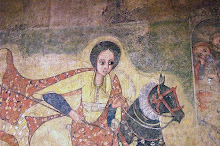
"For each new morning with its light, For rest and shelter of the night, For health and food, for love and friends, For everything Thy goodness sends.”– Ralph Waldo Emerson
Since my last post, I have been busy attending birthday parties, funerals and political campaigns. Here is a summary:
My nephew turned one. My brother's wife decided to have a fabulous birthday party. Missing your nephew's first birthday party may make you a bad aunt. Since I did not want to be a bad aunt, I attended my lovely nephew's birthday party. I am trying to forget all the annoying little details but I endured my in-laws rather well. I enjoyed the party mainly thanks to a seven year old boy, who decided to show me a hilarious interpretive dance.
One of my granduncles passed away. He had a sudden heart attack. Missing your granduncle's bereavement services may make you a bad grandniece. Since I did not want to be a bad grandniece, I attended the week-long bereavement services. I am trying to forget the little annoying remarks but I endured my extended family fairly well. Despite being in mourning, my mother's cousin could not help but to tell me that I, unlike my siblings, am not gregarious. So what? Some are gregarious and some are not!
One of my second cousins, who is also a very good friend, was campaigning for a friend of a friend to be elected as a board trustee of a community college. He is a hardworking community organizer. Missing your cousin's community rally may make you a bad cousin or, worse, a bad friend. Since I did not want to be a bad cousin-friend, I attended one of the political campaigns he organized. I had a fantastic time with some of the funniest clowns in town.
Most social functions could be fun even when they are done out of duty.
I have been fascinated by the "7 rules of success" of Steve Jobs ever since I saw it on ABC's Nightline. Lately, I have been trying to apply it to my own journey, a journey which may seem foolish and crazy to many. Throughout the years, I have applied rule #1, #4, and #6 regularly. I have to consider applying the other rules with more focus and determination.
1.Do what you love ... Passion is everything...
2. Put a dent in the universe ... Don't lose sight of the big vision...
3. Make connections ...Don't live in a bubble. Connect ideas from different fields...
4. Say no to 1,000 things ...What are you saying no to?...
5. Create insanely different experiences ...What are you doing to enrich the lives of others?...
6. Sell dreams not products ...Help others reach their dreams...
7.Master the message ...You can have the greatest idea in the world, but if you can't communicate your ideas, it doesn't matter...
This past May, I promised this to myself: I would review all the sciences, practice verbal reasoning passages, and take the MCAT in September. 2011 was going to be the year in which I would follow my dream.
If you want to make God laugh, tell him about your plans - Woody Allen
It all started well. My review began in mid-June. I found inspiration in a couple of my favorite bloggers who were in the same boat and found time to write about their experiences. July came and went. So did August. To my astonishment, my progress was excruciatingly slow. Spending the dog days of Summer studying for the MCAT would have been delightful if it had not been very time-consuming, especially to a non-traditional pre-med. I have been out of school in a very long time and I have forgotten how to study and manage time. I was mostly surprised to find out that I was only able to complete half of the questions in the allocated time. That would not have been surprising if it had just been for the verbal reasoning section. But that was the case for the physical and biological sections as well. After a long analysis, I could not convince myself that I was fully prepared and I did what I dreaded to do the most. I postponed.
Indeed it is better to postpone, lest either we complete too little by hurrying, or wander too long in completing it - Tertullian
I am already looking forward to 2012 hoping it will be a fruitful year!
I watched 'Va, vis et deviens' (Go, live and become) a few weeks ago. I cannot believe I waited this long to see it. My siblings had recommended it to me a couple of years ago.
‘Va, vis et deviens’ is a French film about an Ethiopian boy who is airlifted from a Sudanese refugee camp to Israel during Operation Moses (1984). Shlomo, the boy, has two big secrets: he is neither a Jew nor an orphan. He is just a son trying to fulfill his mother's request to "go, live and become". The title refers to a common phrase of aspiration uttered by Ethiopian parents to their children.
The story is as much about the unconditional love of the women (his birth mother, his Falasha mother, his French Jew mother, and his wife) who guide him in his journey to “become” as it is about the Shlomo in all of us. I loved the young Shlomo, the multiple languages spoken (Amharic, Hebrew and French), the music, the depiction of Médecins Sans Frontières, and, most of all, the message. Apart from a couple of scenes that I would have deleted, I found the movie extremely moving. At the end, I found myself asking, “I went. I lived. When will I become?”
Vince Vaughn once delighted me when he said, “I’ve never worn a watch. I don’t own a cell phone. When I had one, it always gave me a feeling of, Uh Oh, someone’s calling me.”
Today, WHO classified “radiofrequency electromagnetic fields as possibly carcinogenic to humans, based on an increased risk for glioma, a malignant type of brain cancer, associated with wireless phone use…” Vaughn and I should not be concerned about WHO’s report; but the other 5 billion cell phone users, that is 75% of human population, may need to reevaluate their phone use. Here is another article.
As I was begrudgingly watching the last ten minutes of ‘Celebrity Apprentice’, I was pleasantly surprised by a breaking news report “ … The President will appear briefly to make a statement …” I immediately wondered whether the President needed some air time, you know, to reassure the American people that he was not born in Kenya. After all, Trump’s recent irritating “birther” nonsense had prompted the White house to release Obama’s birth certificate. Then the newscaster continued with “… NBC has confirmed that Osama bin Laden is dead … It is the end of an era …” What! How did that happen? The timing could not have been better for the “Kenyan” President’s major announcement. For me, it was a much better ending of a ‘Celebrity Apprentice’ episode than the one I had anticipated earlier in the evening. The Donald has become the butt of even more jokes - making the whole nonsense even more entertaining.
This song reminds me of a very handsome stranger I met last Spring. I was at the lowest point of this pre-med journey. I was angry at myself for slacking off and for letting the journey overwhelm me. One beautiful late April afternoon, as I was pondering on what I needed to do, I noticed this incredibly handsome man on my way to a spin class. I am too shy, too traditional and too conservative to approach any guy. The most I dare to do is gaze for a second from very, very far. The stranger somehow caught my gaze. I had to hide. For some reason, those quick glances uplifted my mood... Whenever this song comes up, I imagine him... Thank you Mr. incredibly handsome stranger for looking my way...
A recent article reminded me of a conversation I once had with a curious man I used to see at the gym...
It was in the summer of 2006. I had devised a brilliant plan to regularly go to the gym in the middle of the night. I thought it was brilliant because I could avoid the afterwork/evening gym crowd, the traffic and the summer heat. Among the very few patrons who frequented the establishment included a short, stocky man in his mid-forties with a quiet demeanor and a serious disposition. The first time he spoke to me was to ask how old I was. I thought it was a strange question but I replied. He laughed at my answer thinking I was joking because he said I looked very young. On my part, I was surprised he spoke English without any foreign accent because I assumed he was an East Indian. So I ventured with a question that seemed very mundane:
Mi: Where are you from? Man: Some city, U.S.A (I forgot which city he said) Mi: Oh! I thought you were from India. Man (shaking his head): I am White! Mi (eyes wide-open): White? Man (hesitantly): ...I am a Gypsy... Mi (blank stare): Gypsy? Man: ... but don't tell people that... Mi (surprised): Why not?! Man (lowering his voice): People don't like Gypsies... I don't like to tell people... When people find that out, I have to relocate... Mi: What?... I am sure there are many Gypsies...You know Cher is a Gypsy... Man: Is She? Mi: I think so...
The conversation ended as strangely as it began. That night, on my drive home, I felt some remorse for letting my curiosity broach a sensitive issue. When I arrived home, I could not wait to check on the dictionary what a Gypsy was. What did I not understand? My earliest and only clear reference to a Gypsy was La Esmeralda from Victor Hugo's Notre Dame de Paris. It was odd that the only thing I remembered about that character was the mystique that surrounded her and others' contempt toward her.
The American Heritage dictionary defined the word 'Gypsy' as follows:
1. One of a nomadic Caucasoid people originally migrating from the border region between Iran and India to Europe in the 14th or 15th century and now living principally in Europe and the United States. 2. Romany (sense 2). 3. gypsy. One that resembles a Gypsy in appearance or behavior [Shortening and alteration of Egyptian.]
Upon reading that, I was a little bit relieved. At least, I was not completely wrong. Somehow, the conversation left me uneasy, yet piqued my interest to know more about gypsies... their culture... their history... They have been on the news recently... Had it not been for that conversation, I would not have paid attention to their story. This time, I understood what the man was trying to tell me... Cheers for random conversations!
"There is no such thing as a worthless conversation provided you know what to listen for. And questions are the breath of life for a conversation" - James Nathan Miller
I grew up loving soccer. Before I knew who Pele was, I knew Pele was a legendary "king of football". Soccer was the favorite national pastime. Rich-poor, tall-short, fat-thin, kids played it everywhere. We yelled, cried, laughed at the whims of our teams' misses and hits. We were under the spell of soccer magic. Watching a game was playing one. Being a soccer fan was being a soccer player. World Cup was a month long fiesta.
When I moved to the U.S., I wondered what happened to the magic of soccer. Nobody, except the very new immigrants, cared for it. To my greatest disappointment, Americans did not share that worldwide passion and, and, in fact, insisted on not calling it "football". So every World Cup series, nostalgia suffocated me. I turned to Univision to watch the Copa Mundial de FIFA and to be delighted by the announcer's passionate shriek of "gooooooooal". Like in the past, I yelled-cried-laughed mostly alone. But I knew I was sharing the thrill of victory and the agony of defeat with millions around the world. Every World Cup presented an opportunity to revisit my childhood memories of Paolo Rossi's team that had Italy celebrate for weeks, Michel Platini's moves that had my friends emulate them, and Diego Maradona's "Hand of God goal" that had us talking for days...
This World Cup, I was resigned to do the same. I was excited that FIFA selected for the first time an African nation as its host. I expected the minimum coverage from the American media as usual. After all, I have come to accept that soccer is not an American pastime. To my delight, I found out I was slightly off. This year, I was pleasantly surprised at the level of American media coverage. I even felt some American soccer romance budding. Americans are starting to embrace the real "football". I can now be nostalgic in English. Welcome to the World Cup fiesta, America!
This past summer, I met my maternal granduncle L for the very first time. He had come to attend my brother's wedding from Italy, where he has lived almost all his life. He is a fairly young, around forty-something year old, professor of history at a major university. He had married his high school sweetheart, an Italian physician, had a son and then gotten a divorce. Most of the older ladies, smitten by his good looks, outgoing personality, and charming wit, were ready to play matchmakers and find him his soul mate. He was flattered and amused by the attention. What I found most captivating was the cultural difference or, should I say, cultural illusion. A great storyteller that he is, he shared with us many anecdotes, one of them being this.
One day in the early 1990's, he goes to a conference where a colleague, who specializes in African history, is presenting his research findings on Alexander Pushkin's East African ancestry and his future plans for the project. The presenter's position is that Pushkin’s great-grandfather, Abram Petrovich Gannibal, was originally from a border town between Ethiopia and Eritrea and that further research studies need to be conducted. A third colleague and L start to question whether Pushkin should even be a topic in African history. He is Russian and his contributions are to Russian literature. One who is specializing in African history should be focusing on Africa. Why create the illusion of a history? There are many topics within the African continent that need to be explored...The Pushkin expert overhears their remarks, fumes over their discouraging comments and protests to deaf ears...
Upon hearing this, I vehemently disagreed and defended the Pushkin expert. Yes, Yes, Pushkin is Russian but his East African ancestry should be examined and should be of interest to African history experts. In the U.S., Pushkin would have been considered black. Why shouldn't the East Africans claim him as part of their history? In my passionate argument, I even tried to lecture on how history should be studied forgetting briefly that I am talking to a historian. My argument was only met by a stunned look, a look that said ‘cosa stai parlando?’ There was an obvious difference in paradigm.
Long after the conversation ended, I wondered whether my view would have been the same had I not been conditioned by the American view of race and politics. One of the issues that has disappointed, baffled and confronted me in the land of the free is how the free was, dare I say, mentally imprisoned by race. Over the last two decades or so, it has greatly improved. I only imagine it to improve in the future. But still... I sometimes resent the issue and the conditioning.
A recent controversy surrounding a new movie about Alexandre Dumas (père), L’ Autre Dumas, reminded me of L’s Pushkin story. The controversy centered around the fact that a black actor not having the role of Dumas, a person of color, but instead Gérard Depardieu being cast for it. The general American view is probably an emphatic No. It does not matter that Dumas is three-quarter French; he should be portrayed by a black actor and not by Depardieu with a tanned face and curly hair. I wonder what the general French view is.
"The illusion which exalts us is dearer to us than ten-thousand truths.” Alexander Pushkin
I have yet to see the movie and I am already disappointed… not because Depardieu is playing Dumas but rather at the annoying storyline, i.e. Dumas allegedly had a shy collaborator, Auguste Maquet, who deserves much of the credit for the plots and drafts of Dumas’ most famous works. If this is not annoying to a Dumas fan, I do not know what is. I would have liked the illusion that exalted me to remain intact. Oh… how fascinated I was when I first read Dumas’ literary works as a child… and …when I found out his paternal ancestry as a new immigrant... knowing little then how many times I would have to examine and reexamine my illusions.
I need to buy a new work handbag. My old faux leather handbag is looking embarassingly old that, these days, I even try to hide it from the sight of others. Mind you it has only been used for less than two years. The last time I needed a new handbag, I could not decide on which brand and style to choose. I searched and searched without finding any to satisfy my classic taste until I finally received one as a gift. Strange, isn't it?
The Center for Environmental Health went to 100 of the nation's top retailers--- including Target, Macy's, Wal-Mart and Kohl's -- and bought purses. The group had the bags tested for lead at an independent lab. Two separate tests were conducted. Some bags were wiped to see how much, if any, lead would simply rub off the material. The bags also were tested for the total lead content of the products. The tests came back showing disturbingly high levels of lead...
Lead (Pb) is a very toxic metal. Even at a very low level, it has some deleterious effects on the nervous system. Knowing this now will only prolong my search... I may have to wait until tough new national lead standards for bags in stores are in place. Until then, I just have to
protect my old one from the sight of others because it is embarassingly old and
minimize any direct physical contact with it because it may have high levels of Pb or
... and you try to remind yourself it could have been worse ...
...and then you start to sing "Earthquakes may break my bones but they do not break my will to live! I am Toussaint L'Ouverture! I am Haiti! Tomorrow will be here!"
Over the holidays, I read The Catcher in the Rye, a novel by J. D. Salinger, for the first time. Yes, I had never read it! Had I read this novel as a teenager, I would probably have found the author's use of profanity and portrayal of sexuality very vulgar. Unlike the novel's teenage protagonist, Holden Caulfield, I was never a rebel without a cause. To the dismay of many of my peers, I was one of those teenagers who loved playing by the rules. However, I would have related to Holden's issues of identity, alienation, and anxiety to a degree that, like him, I would have labeled some, but not many, of my peers and teachers as "phony".
I enjoyed the novel mainly because I understood Holden's existential dilemma, i.e. childhood's idealism versus adulthood's realism. I remembered this existential dilemma to be acutely painful during the adolescence-adulthood transition years. To my surprise, upon further reflection, I found some of this dilemma to still linger through the adult years. Who has not tried to hold on to one's childhood innocence?
I thought Holden’s narration of his experiences delightfully funny. He was both perceptive and mature at times, and emotional and impatient at other times. Some of the most memorable quotes of the novel include the following:
Holden on his young brother Allie
My brother Allie had this left-handed fielder's mitt. He was left-handed. The thing that was descriptive about it, though, was that he had poems written all over the fingers and the pocket and everywhere. In green ink. He wrote them on it so that he'd have something to read when he was in the field and nobody was up at bat. He's dead now. He got leukemia and died when we were up in Maine, on July 18, 1946. You'd have liked him.
Holden on dancing with smart girls
I’m not kidding, some of these stupid girls can really knock you out on a dance floor. You take really smart girl, and half the time she’s trying to lead you around the dance floor, or else she’s such a lousy dancer, the best thing to do is stay at the table and just get drunk with her.
Holden on roommates with suitcases
At first he only used to be kidding when he called my stuff bourgeois, and I didn't give a damn — it was sort of funny, in fact. Then, after a while, you could tell he wasn't kidding any more. The thing is, it's really hard to be roommates with people if your suitcases are much better than theirs — if yours are really good ones and theirs aren't. You think if they're intelligent and all, the other person, and have a good sense of humor, that they don't give a damn whose suitcases are better, but they do.
Holden on people who cry watching sad movies
The part that got me was, there was a lady sitting next to me that cried all through the goddam picture. The phonier it got, the more she cried. You'd have thought she did it because she was kindhearted as hell, but I was sitting right next to her, and she wasn't. She had this little kid with her that was bored as hell and had to go to the bathroom, but she wouldn't take him. She kept telling him to sit still and behave himself. She was about as kindhearted as a goddam wolf. You take somebody that cries their goddam eyes out over phony stuff in the movies, and nine times out of ten they're mean bastards at heart. I'm not kidding.
Holden on good books
What really knocks me out is a book that, when you're all done reading it, you wish the author that wrote it was a terrific friend of yours and you could call him up on the phone whenever you felt like it. That doesn't happen much, though.
Well, I thought talking to J.D. Salinger on the phone would have been a pleasure. I thought Chicago Tribune reviewer Paul Engle put it well when he said that the story was "emotional without being sentimental, dramatic without being melodramatic, and honest without simply being obscene" and that it was “engaging and believable . . . full of right observations and sharp insight, and a wonderful sort of grasp of how a boy can create his own world of fantasy and live forms."
I may not have been posting my thoughts here... But I was definitely blogging in my head... Until another post, here is an awesome video wishing you...
Oprah's Season 24 Kickoff Party show reminded me of a story Yo-Yo Ma told on Tavis Smiley a year ago. Tavis Smiley had asked him to describe one of the defining moments that put him on the path to being the international icon that he has become. Here is Yo-Yo Ma’s answer in his own words:
When I was in college, ... I took a course in anthropology where I studied and saw films of the bushmen of the Kalahari desert. And so they live now mainly in Botswana and Namibia.
And there was a blind musician, and the film that I saw was called "Bitter Melons." And a blind musician that played and sang, and played on an instrument that I'd ever seen before, but it was so magical that I was 19 and one of the things that you do when you're 19 is you think "What am I going to do with my life? What are the 10 things I want to do?"
That was one of the things I wanted to do. And for some reason -- and I feel very blessed because of that -- I had the opportunity to go there 15 years later and did a documentary on the trance dance and music practices in 12 villages in Namibia. And at the end of the trip, they did a trance dance. And I asked --where you basically go into, well, a trance, and people who go into trance after hours of singing and dancing, there's a laying on of hands.
And I saw something that was so -- it was about religion, it was about medicine, it was about society. Everybody participated, and anybody who came from neighboring villages who needed it also were helped. And the next day, I interviewed the ladies that were clapping the hands, sitting down, and chanting. I said, "Why do you do that?"
And their reply is the best answer for culture I've ever heard "Because it gives us meaning." And that is something -- and so for the bushmen, that was their most complex ritual. It was as complex, as meaningful, as transcendent as Beethoven or Bruckner or Stravinsky, because this is what -- they gave all of what they had for the meaning that they get back. And that's what motivated me ever since.
Watching thousands people on Oprah participating on the flash mob dance had the same magical effect. One of the participants described the experience as “Joy rising.” For a period of time, it seemed that music joined us together—devoted fans, performers, and spectators alike; it felt like it transported us together into another space, made us appreciate its beauty and gave us a different perspective on life, a slightly richer perspective. When the history-making dance or musical trance ended, it seemed like we were a bit fuller, better...
Mi is the nom de blog of a dreamer who is secretly plotting to reach her dream. This chronicles the ups and downs of the journey. At the end of the journey, Mi may decide to pack up and leave the country to explore the world.