Oslo on my mind
The home of most of my maternal family
Bombing News
Panic and terror thousand miles across the ocean
Phone calls and Facebook messages
Assurance and peace of mind
Sadness
Oslo, the sleepy quiet town, in mourning!


1. One of a nomadic Caucasoid people originally migrating from the border region between Iran and India to Europe in the 14th or 15th century and now living principally in Europe and the United States. 2. Romany (sense 2). 3. gypsy. One that resembles a Gypsy in appearance or behavior [Shortening and alteration of Egyptian.]
"There is no such thing as a worthless conversation provided you know what to listen for. And questions are the breath of life for a conversation" - James Nathan Miller

 This past summer, I met my maternal granduncle L for the very first time. He had come to attend my brother's wedding from Italy, where he has lived almost all his life. He is a fairly young, around forty-something year old, professor of history at a major university. He had married his high school sweetheart, an Italian physician, had a son and then gotten a divorce. Most of the older ladies, smitten by his good looks, outgoing personality, and charming wit, were ready to play matchmakers and find him his soul mate. He was flattered and amused by the attention. What I found most captivating was the cultural difference or, should I say, cultural illusion. A great storyteller that he is, he shared with us many anecdotes, one of them being this.
 One day in the early 1990's, he goes to a conference where a colleague, who specializes in African history, is presenting his research findings on Alexander Pushkin's East African ancestry and his future plans for the project. The presenter's position is that Pushkin’s great-grandfather, Abram Petrovich Gannibal, was originally from a border town between Ethiopia and Eritrea and that further research studies need to be conducted. A third colleague and L start to question whether Pushkin should even be a topic in African history. He is Russian and his contributions are to Russian literature. One who is specializing in African history should be focusing on Africa. Why create the illusion of a history? There are many topics within the African continent that need to be explored...The Pushkin expert overhears their remarks, fumes over their discouraging comments and protests to deaf ears...
 Long after the conversation ended, I wondered whether my view would have been the same had I not been conditioned by the American view of race and politics. One of the issues that has disappointed, baffled and confronted me in the land of the free is how the free was, dare I say, mentally imprisoned by race. Over the last two decades or so, it has greatly improved. I only imagine it to improve in the future. But still... I sometimes resent the issue and the conditioning.
A recent controversy surrounding a new movie about Alexandre Dumas (père), L’ Autre Dumas, reminded me of L’s Pushkin story. The controversy centered around the fact that a black actor not having the role of Dumas, a person of color, but instead Gérard Depardieu being cast for it. The general American view is probably an emphatic No. It does not matter that Dumas is three-quarter French; he should be portrayed by a black actor and not by Depardieu with a tanned face and curly hair. I wonder what the general French view is.
"The illusion which exalts us is dearer to us than ten-thousand truths.” Alexander Pushkin
I have yet to see the movie and I am already disappointed… not because Depardieu is playing Dumas but rather at the annoying storyline, i.e. Dumas allegedly had a shy collaborator, Auguste Maquet, who deserves much of the credit for the plots and drafts of Dumas’ most famous works. If this is not annoying to a Dumas fan, I do not know what is. I would have liked the illusion that exalted me to remain intact. Oh… how fascinated I was when I first read Dumas’ literary works as a child… and …when I found out his paternal ancestry as a new immigrant... knowing little then how many times I would have to examine and reexamine my illusions.

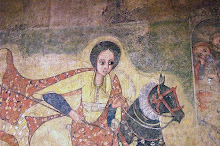
Photo 1: Two of Arts - 2000 Visual Mashups by qthomasbower
Photo 2: Alexander Pushkin in Negro History (Jet Magazine, May 28, 1953) by vieilles annonces
Photo 3: Alexandre Dumas in Negro History (Jet Magazine, July 24, 1952) by vieilles annonces